Why GIS?
Education at Gwangju International School (GIS) goes beyond textbooks and classrooms—it’s a journey of discovery, empowerment, and global perspectives. Students at GIS stand on the pillars of character and knowledge, where learning isn’t just taught but experienced. Our students are encouraged to take an active role in their education, fostering a culture of inquiry that values curiosity over memorization.
While we uphold rigorous academic standards, our primary focus is on nurturing inquisitive minds that ask “how” and “why,” rather than simply accepting answers. At GIS, students are at the center of collaborative, student-led discussions that connect lessons to real-world situations, ensuring they can see the impact of their learning.
More than just academics, GIS believes in the holistic development of every student. Our programs extend to fostering healthy minds, bodies, and attitudes. From our engaging classroom environment to our dynamic extracurriculars and outdoor adventures, students enjoy a well-rounded education that empowers them to explore, grow, and thrive.
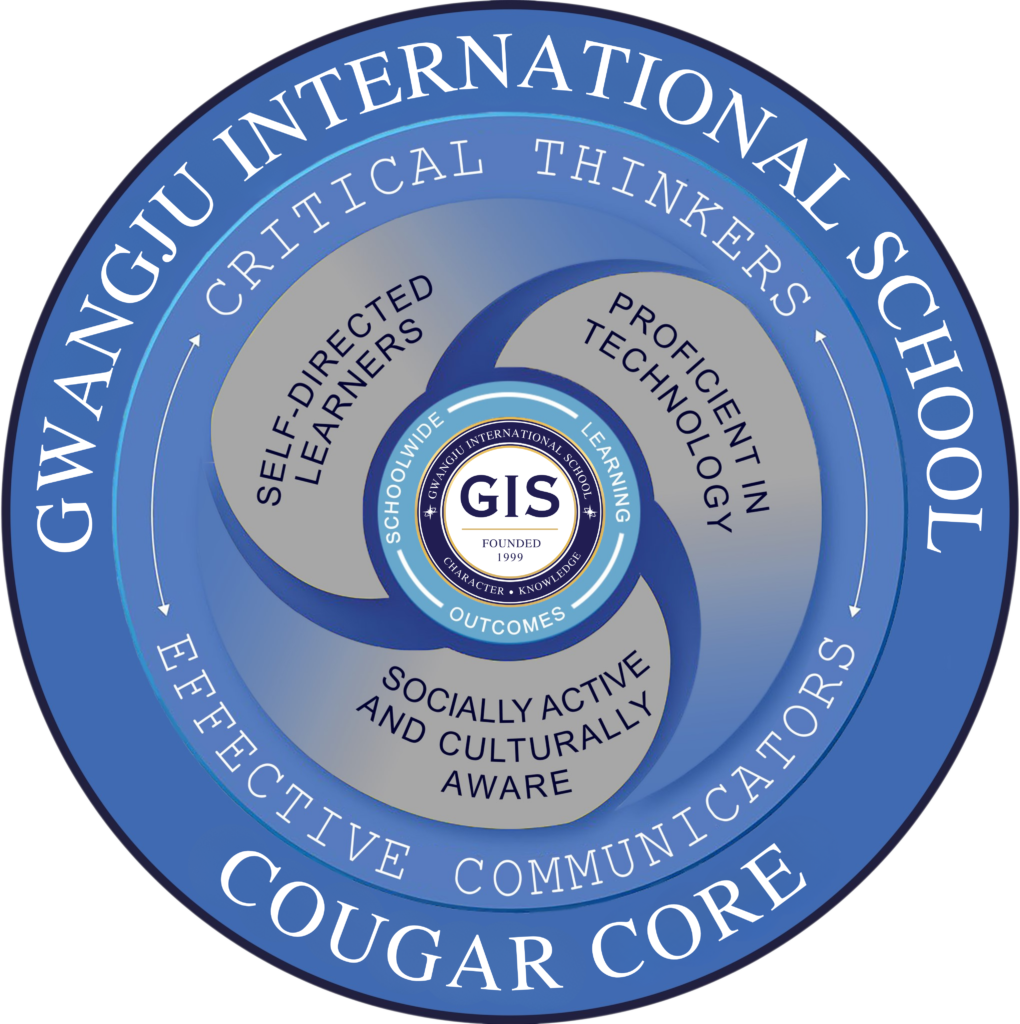
"The Cougar Core"
Our guiding principles are embodied in “The Cougar Core: GIS School-wide Learner Outcomes,” inspired by our mascot, the Cougars. At GIS, we believe that education is about more than just academic achievement—it’s about developing the skills and character necessary for students to thrive within their communities and the wider world.
The Cougar Core represents our commitment to preparing students for life beyond the classroom. After their journey with GIS, we aim for our students to be:
- Critical Thinkers: Encouraged to analyze, innovate, and solve problems confidently. Our students develop the mindset to tackle complex challenges, ask meaningful questions, and explore creative solutions.
- Self-Directed Learners: Empowered to take ownership of their education. They learn to set goals, pursue their passions, and develop the skills for independent, lifelong learning, fostering a genuine love for discovery.
- Proficient with Technology: Equipped with essential digital literacy and technological competence. Through tools like Google Classroom and hands-on experiences in coding and other digital skills, students are prepared to excel in today’s interconnected, technology-driven world.
- Effective Communicators: Nurtured to express their ideas clearly and confidently. Whether engaging in meaningful dialogue or sharing perspectives, our students are taught to connect with others both locally and globally, honing essential interpersonal skills.
- Socially Active and Culturally Aware: Inspired to engage within their communities and demonstrate a deep appreciation for cultural diversity. Our students are global citizens, eager to contribute positively to the world around them.
What Sets GIS Apart
We take pride in the features that set GIS apart. Our commitment to excellence is reflected in the unique qualities that define the GIS experience. Here are the key aspects that distinguish us:
- Accreditation: GIS is the only school in Gwangju and the JeollaDo Province accredited by the Western Association of Schools and Colleges (WASC), a recognition of our commitment to educational excellence.
- First and Only: As the first and only international school in Gwangju, GIS has been a pioneer in providing a globally recognized education since 1999.
- Curriculum: We offer a challenging American curriculum that emphasizes critical thinking, creativity, and problem-solving, setting the standard for high-quality education in the region.
- Qualified Teachers: Our passionate and experienced international educators are dedicated to nurturing your child’s academic and personal growth from Kindergarten through Grade 12.
- Teacher-Student Ratio: With a remarkable 4:1 teacher-student ratio, GIS provides a personalized learning environment where every student receives individual attention and support.
- Extracurricular Activities: Beyond the classroom, students at GIS engage in a wide range of clubs, sports, and activities, including chess, gardening, futsal, basketball, volleyball, statistics, Model United Nations (MUN), and orchestra. These opportunities help students develop leadership skills, teamwork, and passions outside of academics.